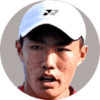
Moutet C vs Rinderknech A on 6 June


The first week of June on the pristine grass of the Bonmont Tennis Masters in Switzerland – a setting that evokes the traditions of the sport’s most hallowed lawns. On 6 June, we have a fascinating all-French clash between raw, combustible talent and methodical power. Corentin Moutet, the left-handed magician whose game oscillates between genius and self-destruction, faces Arthur Rinderknech, the towering right-handed engineer who seeks to impose order through sheer force. This is not a Grand Slam, but the stakes are quietly significant: an early statement win on grass during the truncated European summer season. Clear skies and a fast, true surface are forecast; the ball will skid through, favouring the bigger server but also rewarding Moutet’s ability to take the ball early. What we have here is a classic clash of chaos versus control, touch versus thunder.
Moutet C: Tactical Approach and Current Form
Corentin Moutet arrives with a form line that reads like a thriller: win, loss, win, loss, retirement. His last five outings have been a microcosm of his career. Most recently on the Challenger circuit, he dismantled a big server with breathtaking feel, only to follow it with a lethargic performance in which unforced errors ballooned past 35. On grass, his movement is elite. A low centre of gravity and exceptional sliding ability allow him to defend angles that leave opponents frustrated. The key statistics for Moutet are first-serve percentage (hovering around 58% on grass) and return points won against first serves (a meagre 34% in his last three matches on the surface). When focused, his backhand slice – which stays exceptionally low – is a weapon of mass disruption. He will try to drag Rinderknech into extended rallies, use the drop shot liberally, and force the big man to bend. The main concern is mental: a shoulder niggle that forced his retirement in Lyon appears resolved, but Moutet’s temperament on a fast surface, where time to think is minimal, remains a ticking clock. He has no injury listed, but the fragility is psychological. He is the artist, but the canvas is grass – a surface that punishes indecision.
Rinderknech A: Tactical Approach and Current Form
Arthur Rinderknech arrives in Bonmont with a far more predictable, yet equally dangerous, profile. The 6’5” right-hander has won three of his last five matches, all on clay, but his game is fundamentally better suited to this low-bouncing Swiss grass. The numbers tell the story: in his last ten matches on fast surfaces, he averages 58% first serves in, but when that first serve lands, he wins 76% of points. The second serve, however, is a liability – often sitting up at 140-150 km/h with predictable spin. Rinderknech’s tactical blueprint is straightforward: hold at all costs, then apply pressure on Moutet’s delivery. He will stand inside the baseline to receive second serves, looking to hammer forehand returns cross-court into Moutet’s weaker backhand wing. His baseline game lacks variety, but on grass the flat trajectory of his groundstrokes becomes an asset; the ball stays low and rushes through the court. Fitness is not an issue – he has played no marathon five-setters recently. The concern is his lateral movement, especially when pulled wide to the deuce side. If Moutet can exploit that open court with angled forehands, Rinderknech’s long limbs become a disadvantage. He is fully fit, and his motivation is clear: to prove that his power game belongs on grass against a more naturally gifted, but erratic, compatriot.
Head-to-Head: History and Psychology
These two have met only once before on the ATP main tour – a three-set grind on indoor hard courts in Metz in 2022. Rinderknech prevailed 7-6, 4-6, 6-3, in a match that revealed the enduring psychological template. Moutet dominated the second set with sublime angles and drop shots, only to lose focus early in the third, dropping serve with a double fault and a reckless forehand error. The statistics from that encounter are instructive: Moutet won 42% of return points overall but only 28% of points when returning Rinderknech’s first serve. For Rinderknech, he struck 15 aces but also offered six double faults. On grass, those serving metrics will be amplified. There is no bad blood, but a subtle hierarchy exists: Rinderknech sees himself as the professional’s professional; Moutet sees himself as the superior talent. That tension will surface the moment a line call goes against Moutet or Rinderknech hits a routine overhead. The psychological edge belongs to Rinderknech, simply because his game does not require inspiration – only execution.
Key Battles and Critical Zones
First Serve Percentage vs. Return Aggression: This is the alpha duel. If Rinderknech lands first serves at 60% or above, the match becomes a procession. If he dips below 50%, Moutet will step in, take time away, and redirect the ball into open spaces. Watch Rinderknech’s ball toss – when it drifts to the right, a slice serve wide to Moutet’s backhand in the deuce court is coming. Moutet’s ability to read that and chip an angled return will be decisive.
The Deuce Court Cross-Court Exchange: Most rallies will unfold on the diagonal of Rinderknech’s forehand to Moutet’s backhand. Moutet’s single-hander is a beauty when he has time, but on grass, with heavy topspin kicking to shoulder height, he will be forced to slice or hit flat. Rinderknech’s plan is to camp in that cross-court exchange, then suddenly go down the line to Moutet’s open forehand side. The player who first finds the inside-out forehand from that pattern wins the tactical battle.
The Drop Shot and the Approach: Moutet will deploy the drop shot early and often, particularly from behind his baseline. Rinderknech’s reaction speed and first-step explosiveness have historically been below tour average. If Moutet can make the big man lunge forward repeatedly, he will force rushed volley errors. Conversely, Rinderknech will look to approach the net behind deep, flat shots to Moutet’s backhand – a low-percentage shot for a passer of Moutet’s style. The critical zone is the service line; whoever controls that no-man’s land dictates the match.
Match Scenario and Prediction
The opening four games will tell us everything. Expect a tight, nervous start with two breaks of serve in the first three games – grass does that to rhythm players. Moutet will likely take an early lead through clever variation, then suffer a mid-set lapse where three consecutive unforced errors gift the break back. Rinderknech will remain emotionally flat, which on grass is an advantage: he will not ride the highs or lows, just keep bombing serves. The deciding factor will be the return of serve in the 5-5 or 6-6 games. Historically, Moutet’s return numbers drop sharply after 30 minutes as his attention wanders. Rinderknech, by contrast, serves harder in clutch moments.
Look for a match that goes to two tight sets, likely with one tiebreak. The total games should sail over 22.5, as both players hold at a respectable but not dominant clip. Moutet might win the first set on a flash of brilliance, but Rinderknech’s relentless depth and the fast conditions – which reduce Moutet’s reaction time – will tilt the second. Prediction: Arthur Rinderknech to win in three sets (e.g., 4-6, 7-6, 6-3). For those seeking a game handicap, Rinderknech -2.5 games offers value, and the total games over 23.5 is a strong play. Do not expect a three-tiebreak marathon – Moutet will find a way to self-destruct in one service game per set.
Final Thoughts
This Bonmont encounter answers one sharp question: on grass, where margins are millimetres and the ball slides through the court, can Corentin Moutet’s kaleidoscopic genius overcome the fundamental physics of a bigger, stronger, more predictable opponent? Or will Arthur Rinderknech once again prove that on fast surfaces the serve is the great equaliser – and the great simplifier? By the time the Swiss twilight settles over the Bonmont lawns, we will know whether artistry or artillery rules this little corner of the tennis world. Do not blink; this one will turn on a single break point.