Hsu Y H vs Galarneau A on 6 June
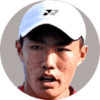

The grass court season is in full swing, and the ATP Challenger event in Stuttgart is where we separate pure clay-crafters from natural-born attackers destined for Wimbledon. On 6 June, the centre court will host a fascinating first-round encounter between Yu Hsiou Hsu and Alexis Galarneau. This is not just a battle for ranking points; it is a collision of two distinct tennis philosophies. Hsu, the explosive Taiwanese right-hander with lightning footwork, faces Galarneau, the Canadian lefty who uses structure and precision like a surgeon's scalpel. The weather forecast for Stuttgart promises a dry, warm day with minimal wind—perfect for high-octane tennis. For both men, this is a golden opportunity to make a statement on a surface that rewards courage over hesitation. The stakes are simple: adapt to the grass's eccentricities faster than your opponent, or go home.
Hsu Y H: Tactical Approach and Current Form
Yu Hsiou Hsu arrives in Stuttgart with a 3-2 record over his last five matches, a statistic that does not fully capture his volatility. The 24-year-old has been grinding on the hard courts of Asia and the American Challengers, but grass is where his athleticism could finally translate into serious disruption. Hsu is a high-risk, high-reward operator. He plays with a low centre of gravity, allowing him to redirect pace off both wings, but his primary weapon is his first serve. When his toss is consistent, he can touch 215 km/h. However, his first-serve percentage hovers around a nervy 56–58% on faster surfaces. If that number drops below 55%, Galarneau will feast on second deliveries.
Hsu's baseline game is built on taking the ball early. He does not possess the heavy topspin of a clay specialist; instead, he flattens his forehand out, using the grass's low bounce to skid the ball through the court. The key statistic to watch is his return points won on second serves—currently a modest 48% on outdoor hard courts. On grass, that figure needs to jump to 52% or higher to break the Galarneau serve consistently. There are no injury concerns for Hsu, a relief given his history of nagging lower-back issues. He is the physical engine in this matchup. The question is whether his tactical brain can keep up with his legs. If he starts painting the lines and rushing the net behind his heavy drive, he becomes a nightmare to handle.
Galarneau A: Tactical Approach and Current Form
Alexis Galarneau enters this contest on a 4-1 run in his last five outings, including a promising quarter-final on the grass of Surbiton. The Canadian lefty is the polar opposite of Hsu. Where Hsu plays on instinct, Galarneau relies on structure. A product of the North Carolina State University system, his game is built on high-percentage tennis: deep cross-court rallies, waiting for the error, and using the lefty advantage to drag right-handers off the court on the ad side. His lefty slice serve out wide is a devastating tool on grass, opening up the entire court for a follow-up forehand into the open corner.
Galarneau's forehand is not a cannon, but it is a metronome. He hits his spots with clinical accuracy, often targeting the Hsu backhand—traditionally the weaker wing for most players. The Canadian's biggest weapon, however, is his transition game. He reads the play exceptionally well, converting defence into offence with subtle changes of direction. His return statistics are elite for this level; he gets 65% of first serves back into play. That number should alarm Hsu. If Galarneau neutralises the first strike, he drags the match into a physical, attritional battle. He is fully fit and looks sharper than he has all season. For Galarneau, this is about execution. He does not need to invent magic; he just needs to apply pressure relentlessly.
Head-to-Head: History and Psychology
These two competitors have never met on the ATP Tour or at the Challenger level. This is a blank canvas, which changes the psychological dynamics significantly. Without a historical roadmap, the opening four games will be purely about adaptation. Who reads the grass bounce quicker? Who handles the pressure of the net rush? In these situations, the advantage usually goes to the player with the more stable temperament. Galarneau has the edge there. He is a composed, almost stoic competitor who rarely beats himself with unforced errors. Hsu, conversely, is an emotional player. When he is rolling, he looks like a top-50 talent; when his game goes off the rails, the wheels come off quickly—often in the form of double faults and rushed drop shots. The lack of head-to-head data favours the smarter player, not necessarily the faster one.
Key Battles and Critical Zones
The primary duel will be Hsu's first serve versus Galarneau's return position. Galarneau tends to stand relatively deep to give himself time to read the flat trajectory. If Hsu paints the T on the deuce court, he can win cheap points. If he misses, Galarneau will step in and take time away from the Taiwanese player's recovery. This is a serve-return chess match that will dictate the entire flow.
The second critical zone is the forehand-to-backhand diagonal. Galarneau will run a clinic of lefty patterns, jamming Hsu's backhand high and deep. Hsu's slice backhand is mediocre on grass—it tends to sit up rather than bite. If Hsu cannot hurt Galarneau from that wing, the Canadian will simply work the point until he earns a short ball. The decisive area of the court will be the service line and inside. Whoever takes control of the short ball and approaches the net first will win the majority of these points. On this slick Stuttgart grass, hesitation at the net is death.
Match Scenario and Prediction
Expect a tense first set where both men hold serve until 4–4. The difference will come on the big points. Galarneau will target Hsu's second serve with aggressive chip-and-charge returns. Hsu will try to overpower the Canadian with flat winners down the line, a high-risk strategy. The most likely scenario is that Galarneau's consistency and lefty geometry force Hsu into pushing just a little too hard. Hsu's error count will spike in key moments—specifically the 30–30 points. Look for a single break of serve per set, orchestrated by Galarneau's ability to extend the rally to seven or eight shots, where Hsu's footwork tends to get sloppy. Predicted outcome: Galarneau in straight sets, but with one tiebreak (7–6, 6–4). The total games likely fall under 22.5, as both players will attack early rather than grind from the baseline.
Final Thoughts
This match will answer one sharp question: can raw athleticism overcome tactical rigidity on grass? Hsu has the firepower to blow anyone off the court for a set. But Galarneau is the type of lefty wall that frustrates big hitters into oblivion. In Stuttgart on 6 June, trust the Canadian's brain over the Taiwanese athlete's brawn. If Galarneau serves at 60% or better, he walks off the court with a clinical, boring, and highly effective victory.