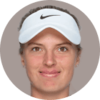
Galfi D vs Jorge F on 23 June


The first rays of an early summer sun are set to bathe the clay courts, but for Dalma Galfi and Francisca Jorge, the warmth will bring little comfort. On 23 June, these two baseline warriors will engage in a battle of attrition that promises to be a fascinating study in contrasts. For the Hungarian, this is a quest to reassert her dominance on dirt; for the Portuguese, an opportunity to announce her arrival on the biggest stage. With both players possessing the firepower to dismantle the other, this women's tennis encounter is poised to be a brutal, enthralling chess match played at high velocity. The clay demands patience, yet the modern game demands aggression. Who will strike the perfect balance?
Galfi D: Tactical Approach and Current Form
Dalma Galfi steps onto the court as a player with something to prove. Once a promising junior star, her professional career has been a rollercoaster of injuries and inconsistent form. Yet recent performances suggest a player finally harnessing her immense power. Over her last five matches, she has relied heavily on first-strike tennis, averaging an impressive 68% of first serves in and converting those points at a rate of roughly 73%. This is her bedrock. When Galfi's first serve fires, she dictates the tempo from the very first shot. Her tactical approach is aggressive, a high‑risk, high‑reward system built on depth and power. She looks to pound the ball deep into the corners, forcing opponents onto the back foot and creating short balls that she can attack with her heavy, flat forehand. That forehand is her primary weapon, generating significant racquet‑head speed to hit through the court.
The critical question for Galfi is her ability to navigate neutral rallies. Her backhand, though solid, can become a liability under pressure, often breaking down when she is forced to generate her own pace on a defensive stretch. The engine of her game is clearly her serve‑and‑forehand combination. If both function at peak efficiency, she is a top‑50 calibre player. However, the physical and mental resilience required to sustain this level for an entire match has been her Achilles' heel. She must avoid the lapses in concentration that have plagued her career. No injuries have been reported, but her history suggests her physical condition remains a key watchpoint. A long, gruelling match will test her endurance to the limit and could expose her movement, which is often a step slower than the tour's elite movers.
Jorge F: Tactical Approach and Current Form
Francisca Jorge arrives with the confidence of a player who has nothing to lose and everything to gain. The Portuguese is a natural on clay, a surface she uses to her advantage with craft and intelligence. Her game rests on a different foundation than Galfi's. While the Hungarian relies on power and intimidation, Jorge relies on consistency, court coverage, and tactical nous. Her recent form—a solid 3‑2 record in her last five—is underscored by a remarkable 82% win rate on second serve. This staggering statistic speaks volumes about her tactical intelligence. She uses heavy topspin on her kick serve to buy time and set up her game. She constructs points meticulously, probing her opponent's weaknesses with a relentless barrage of high‑bouncing balls to the backhand side.
Jorge's style is designed to frustrate power hitters. She is a counter‑puncher with a surprising level of aggression when given the opportunity. She lacks Galfi's raw power, but her ability to redirect pace and change direction with precision is exceptional. Her movement is her greatest asset: she anticipates well and slides into her shots with the grace of a natural clay‑courter. Her forehand is her stronger wing, and she uses it to dictate angles, pulling her opponent off the court before striking the winner down the line. There are no fitness concerns surrounding Jorge, and she appears to be in peak physical condition. Her recent performances indicate she is relishing the increased pace and intensity of these higher‑level matches, displaying a mental fortitude that has sometimes been absent in her past.
Head-to-Head: History and Psychology
For a clash of this magnitude, the historical record between these two players is surprisingly sparse. This lack of a direct head‑to‑head history adds a fascinating layer of psychological intrigue. Neither player has the benefit of a tactical blueprint that they know works against the other. Instead, they must rely on scouting and pre‑match analysis. This often produces a cautious, probing first set as they try to decode each other's rhythms and patterns. Without the weight of a one‑sided head‑to‑head record, the psychological battle will be heavily influenced by current momentum. Jorge will feel she has nothing to lose against a higher‑profile opponent, potentially leading to a fearless brand of tennis. Conversely, Galfi will be acutely aware that this is a match she is expected to win—a pressure that can sometimes stifle a player who relies on freedom and aggression. This will be a test of character as much as skill, and the opening exchanges could set the tone for the entire match.
Key Battles and Critical Zones
The central narrative of this match is the clash between raw power and intelligent consistency—a classic tennis matchup. The first key zone is the deuce‑court service box. Galfi will look to exploit Jorge's backhand by serving wide with heavy slice. If she can drag Jorge off the court and open up the space, she can finish the point with a simple forehand into the empty area. Jorge's tactical response will be to neutralise this by either taking the ball early or slicing it back cross‑court, forcing Galfi to hit one more ball and reset the point.
Conversely, the second critical zone is the ad court on Jorge's serve. Jorge will deploy her heavy topspin kick serve here to pull Galfi out wide, a tactic designed to open up Galfi's backhand. This will be the primary area where Jorge tries to engineer a short ball. The decisive duel, therefore, is not a direct personal one, but the battle of forehand versus backhand down the line. If Jorge can consistently attack Galfi's backhand wing with depth and spin, she can force the error. However, if Galfi can run around her backhand and unleash her powerful forehand from this position, she will dominate the court. The middle of the court will be a battleground: Jorge will try to keep the ball there to neutralise the power, while Galfi will seek to move her opponent from side to side to create the perfect angle for the kill shot.
Match Scenario and Prediction
This match has the potential to be a fiercely contested, three‑set war of attrition. The first set will be a period of intense study, with both players trying to establish their patterns. I expect a high number of breaks of serve as they feel each other out. Galfi will likely throw everything at Jorge from the start, trying to blow her off the court. Jorge, in turn, will absorb the pressure and patiently wait for her moment to counter‑punch. The weather is forecast to be warm and dry, which favours Galfi's aggressive style, as the ball will fly through the court more quickly, making it harder for Jorge to time her defensive slices. However, the longer the match goes, the more it shifts in Jorge's favour.
Galfi's aggressive tennis will yield a high number of winners and unforced errors, making her a risky bet for a straight‑set victory. Jorge's consistency will force Galfi to hit through a wall of balls, and the psychological pressure of missing those shots could prove too much. I anticipate the decisive moments will come in the second half of the second set, when the initial adrenaline wears off. The conditions and Galfi's power suggest she will take the first set. However, Jorge's ability to raise her level and impose her game plan on the most important points will be the deciding factor. I predict a gruelling match that surpasses 2.5 hours, ultimately going the distance.
Prediction: Jorge F to win in three sets. The game handicap should be considered, but the most solid bet is Over 22.5 total games.
Final Thoughts
This encounter is a fascinating litmus test for both players. For Galfi, it is a question of whether her power can consistently overcome the dogged consistency of a natural clay‑courter. For Jorge, it is a chance to prove that her tactical maturity can neutralise the arsenal of a player who, on paper, should beat her. The winner will be the player who can impose their identity on the match and withstand the inevitable ebbs and flows of momentum on the red dirt. The stage is set for a compelling drama where every point is a microcosm of the larger battle: the unstoppable force against the immovable object. Will the power of Galfi's groundstrokes crack the Portuguese fortress, or will Jorge's relentless patience and precision grind the Hungarian star down?