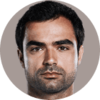
Sweeny D vs Roncadelli F on 22 June


The freshly cut grass of the All England Club is not merely a surface; it is a stage for a particular brand of tennis genius. And on the opening day of The Championships, Court 12 hosts a fascinating first-round encounter between two players at very different career junctures. The Australian qualifier, Dane Sweeny, faces the Italian rising star, Franco Roncadelli. This is not just a match; it is a stylistic collision between old‑school, grinding tenacity and a flamboyant, modern baseline artillery. The stakes are immense: a passage into the second round of the most prestigious tournament in the world, a rankings‑points windfall, and the sheer glory of a deep run at the cathedral of tennis. With the sun expected to cast long shadows and the grass playing fast and true, the outcome will hinge on each man’s ability to adapt to the unique demands of Wimbledon.
Sweeny D: Tactical Approach and Current Form
Dane Sweeny arrives at SW19 as a man on a mission. His recent form on the Challenger circuit has been a testament to resilience and a clear tactical evolution. In his last five matches, he has claimed three victories, with his serve proving to be a devastating weapon. During the qualifying rounds, he averaged an impressive 68% first‑serve percentage, a figure that jumps off the page for the grass season. More importantly, he converted that into a staggering 82% win rate on his first serve. On a surface where every point can be over in a flash, Sweeny’s ability to earn cheap points is his bedrock. His second serve, however, remains a vulnerability, hovering around a 50% win rate – an opening the Italian will be sure to probe.
The Australian’s game is built on a traditional serve‑and‑forehand pattern. He constructs points with a heavy, spinning forehand that he uses to dictate from the back of the court, often looking to open up the ad side. His movement is economical, favouring a grind that forces opponents into errors. The engine of his game is his mental fortitude; he rarely beats himself, a quality that has seen him through multiple gruelling three‑set battles in the qualifiers. Currently, Sweeny is in pristine physical condition, with no known injury concerns. His entire preparation has been geared towards this moment, making him a dangerous floater in the draw.
Roncadelli F: Tactical Approach and Current Form
Franco Roncadelli presents a stark contrast. The Italian prodigy is a product of the modern clay‑court academy, though his game is rapidly translating to faster surfaces. His recent run includes a semi‑final appearance on the grass of Surbiton, where he showcased his adaptability. Over his last five matches, he posted a phenomenal 44% return points won, a statistic that underlines his primary weapon: the return of serve. Roncadelli stands far back to receive, using his incredible racquet‑head speed to redirect pace and take the initiative early in the rally. He is a maestro of the short angle, pulling opponents off the court with his inside‑out forehand before finishing with a deft drop shot or a precise volley.
The key to Roncadelli’s game is his aggressive baseline philosophy. He looks to take the ball on the rise, stripping the opponent of time. His first‑serve percentage is slightly lower than Sweeny’s at 61%, but he compensates with a more varied delivery, using slice and kick serves to set up his formidable forehand. There is a fragility, however, in his game management. In tight moments, he can be seduced by the spectacular, opting for low‑percentage winners rather than constructing the point. His physical condition is optimal, with no injuries reported, and the Italian camp is buzzing with confidence about his prospects on grass. For Roncadelli, the key will be to maintain his focus and not let the occasion overwhelm his expansive game.
Head-to-Head: History and Psychology
Interestingly, the official ATP Tour record shows no previous meetings between Sweeny and Roncadelli. This is a blank canvas: a clash of two rising forces who have never crossed paths on the professional circuit. In the absence of head‑to‑head data, the psychological battle will be defined by contrasting pressures. Sweeny, the qualifier, has already won his "final" by reaching the main draw. He will play with the freedom of a man with nothing to lose, a dangerous prospect for any opponent. He also carries the momentum of three consecutive victories on these very lawns.
Roncadelli, conversely, carries the weight of expectation. As the higher‑ranked player and a known name, he faces pressure to perform and avoid an early upset. He will be acutely aware of Sweeny’s serving prowess from scouting reports, which could lead to a tentative start. The Italian will need to impose his authority early to silence the Australian’s belief. The psychological edge is a subtle knife: Sweeny’s comfort on grass versus Roncadelli’s superior ranking and natural talent. The first four games will be telling, as each player seeks to assert his identity and break the psychological deadlock.
Key Battles and Critical Zones
The epicentre of this contest will be the battle for control on the return of serve. Roncadelli’s ability to read Sweeny’s first delivery and get it back into play will dictate the flow of the match. If Sweeny can consistently hit his spots with his first serve, he can neutralise the Italian's potent return game and set up simple forehand patterns. Conversely, if Roncadelli makes early contact, he will put the Australian on the back foot, forcing him to play defence. This is where the match will be won or lost.
The second decisive zone will be the forehand exchanges cross‑court. Both players favour their forehands as their primary weapon, but they use them differently. Sweeny employs heavy topspin to push his opponent back, while Roncadelli uses flat, penetrating shots to take time away. The player who first establishes dominance in this exchange – by taking the ball earlier or dictating the angle – will likely seize control of the majority of baseline rallies.
Finally, the net will be a crucial area. While both are predominantly baseliners, Sweeny has shown a greater willingness and proficiency in coming forward to finish points, a trait well suited to grass. Roncadelli, though possessing a good touch, often prefers to pass from the baseline rather than approach the net. The Australian’s ability to mix up his rhythm by chipping and charging could be a decisive strategic surprise, forcing the Italian to hit passing shots under pressure.
Match Scenario and Prediction
The match is likely to be a high‑intensity, serve‑dominated affair in the early stages, with both players holding comfortably. The first break of serve will be paramount, potentially swinging the momentum for the entire set. The key metric to watch will be the second‑serve return points won. If Roncadelli can consistently attack Sweeny's second delivery, the Australian will be forced to take more risks on his first serve.
Sweeny’s path to victory lies in high‑percentage tennis: hitting big first serves, dictating with his forehand, and using the drop shot to exploit the court's length and bring Roncadelli forward. Roncadelli must be patient, using his superior movement to redirect pace and wear down the Australian’s legs. The Italian's superior firepower from the baseline suggests he will find a way to break through, but Sweeny's grass‑court nous and mental resilience will keep it close. Look for Roncadelli to edge the key moments.
Prediction: Roncadelli F to win in four tight sets. Expect a high number of aces and a total games count hovering around the over/under line of 38.5. The match will be defined by a crucial break of serve in the second set that shifts the psychological weight firmly in the Italian's favour.
Final Thoughts
This is the beauty of Wimbledon's opening rounds: the theatre of the unknown. Can the relentless, structured game of Dane Sweeny withstand the shot‑making brilliance of Franco Roncadelli? The Australian has the tools to cause a major upset, but the Italian possesses the singular talent that often distinguishes a promising talent from a true champion. This match answers the simple yet profound question: is Roncadelli’s flair a fragile spectacle or the foundation of a future grass‑court contender? The answer, under the English sun, awaits us.