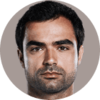
Barrena A vs Galarneau A on 18 May


The first real tremor of Roland Garros 2026 is set to ripple across Court Suzanne Lenglen this Monday, 18 May, as two of the most intriguing prospects on the Challenger circuit collide for a place in the second round. Spain’s Alberto Barrena and Canada’s Alexis Galarneau have taken wildly different routes to this year’s edition, yet both carry the kind of live-wire tennis that can dismantle a seed on an off day. With a stiff north-westerly breeze forecast for the afternoon, the conditions will favour those who can manipulate spin and adjust their trajectories mid‑rally. For Barrena, a clay‑lifer forged on the slow red dirt of Alicante, this is a chance to announce himself on the biggest stage. For Galarneau, the quicker‑footed North American, it is an opportunity to prove that his indoor hard‑court pedigree can translate into sustained clay‑court pain. The stakes are simple: momentum heading into the second round of a major.
Barrena A: Tactical Approach and Current Form
Barrena arrives in Paris riding a modest but telling wave – three wins in his last five matches, all on clay, including a gutsy three‑set comeback in the final round of qualifying against a higher‑ranked Italian grinder. His numbers over the past two months on dirt are revealing: a 67% first‑serve percentage (above his career average of 62%) and a staggering 54% of first‑serve points won on return. Those figures define his game. He is not a flat‑trajectory bomber but a heavy‑topspin architect who builds points from the deuce corner and dares opponents to break his rhythm. Barrena’s average rally length on clay stretches to 8.4 shots – the hallmark of a player who trusts his lungs and his forehand cross‑court more than raw winners.
Tactically, expect Barrena to deploy the classic Spanish template: high, kicking serves to Galarneau’s backhand, followed by a deep, sliding defensive position two metres behind the baseline. From there, he will loop forehands with over 3,000 rpm, pushing Galarneau’s strike zone above shoulder height. The key is his backhand slice – a low, skidding knife that dies on damp clay. Barrena uses it not as a defensive chip but as a trigger to rush forward, often converting into a drop shot or a short‑angle cross. The engine of his system is his footwork; he covers 3.2 metres per shot on average, one of the highest figures on the Challenger tour. No injuries to report – Barrena is fully fit, though his left adductor was heavily taped in practice on Saturday. That is a minor flag, but on clay he glides rather than sprints.
Galarneau A: Tactical Approach and Current Form
Galarneau’s recent form is harder to read – two wins, three losses, but the defeats came against top‑50 players on indoor hard courts, a surface that rewards his crisp, flat hitting. The Canadian’s clay statistics are a study in contrast: a 71% hold rate (respectable) but only a 24% break rate on red dirt (well below his hard‑court 37%). Galarneau’s weapon is obvious – a first serve that averages 210 km/h, often placed with sniper precision down the T. In his last match, a three‑set loss to a clay specialist in Bordeaux, he fired 14 aces but lost because his second‑serve points won plummeted to 42% once the rallies extended beyond six shots. That is the vulnerability Barrena will chase relentlessly.
Galarneau’s tactical identity is aggressive baseline offence: he takes the ball early, flattens out his two‑handed backhand down the line, and attacks any short ball with a high‑net clearance winner. He is uncomfortable sliding on clay, often preferring to plant his feet and strike, which leaves him exposed to wide, loopy angles. His physical condition is excellent – no injury concerns – but his movement on clay remains a question mark. The decisive unit in his game is the first‑strike sequence. If he can land 55% or more of first serves and hit a forehand winner within the first four shots, he dictates. If not, Barrena’s defensive depth will force Galarneau into unforced errors, a pattern that has haunted him on slow surfaces (career 38 unforced errors per three sets on clay versus 27 on hard).
Head‑to‑Head: History and Psychology
These two have never met on the ATP Tour or in Challenger main draws. The blank slate adds a layer of tension: no muscle memory, no ingrained patterns. What we do have are shared opponents over the last eight months. Against lefty clay‑grinders ranked between 120 and 200, Barrena is 7‑2, while Galarneau is 3‑5. Against big‑serving, flat‑hitting right‑handers (Galarneau’s profile), Barrena is 5‑4 – competitive but not dominant. The psychological edge tilts slightly toward Barrena because he has already survived three qualifying rounds here, adapting his timing to the heavier Roland Garros balls and the slower court speed. Galarneau received a wildcard and has played only two practice sets on site. In a five‑set format (first round men’s singles), that match sharpness gap is real. Expect early nerves from both, but Barrena’s recent experience of closing out tense three‑set qualifiers should steady him sooner.
Key Battles and Critical Zones
Galarneau’s second serve vs Barrena’s return position. Galarneau’s second serve averages 155 km/h with modest kick – a speed Barrena can step into and attack. Watch for Barrena to stand a full metre inside the baseline on second deliveries, looking to flick a short‑angle forehand that pulls Galarneau off the court. If Galarneau cannot win 50% of second‑serve points, the match slips away.
The backhand slice exchange. Barrena will repeatedly slice cross‑court to Galarneau’s backhand, forcing the Canadian to bend low and generate his own pace. Galarneau prefers the ball waist‑high; the low skid is his kryptonite. The player who controls that diagonal – either by attacking early or varying height – will own the centre of the court.
Deuce‑court patterns. Both players favour the inside‑out forehand, but the wind forecast (15‑20 km/h from the north‑west) will push cross‑court balls toward the singles sideline on the north end. The savvy shot‑maker – likely Barrena – will use the wind to hold the ball up or accelerate it, disrupting Galarneau’s timing. The decisive zone is the backhand corner of the server. If Galarneau can hit enough flat backhands down the line to keep Barrena honest, he escapes the high‑topspin trap. If not, Barrena will camp there and never leave.
Match Scenario and Prediction
The first two sets will feel like a chess match on a slow, damp canvas. Expect early breaks – both men will need five to six games to find their range in the wind. Barrena will try to stretch rallies beyond seven shots, where his consistency and shot tolerance (82% of balls kept in play) overpower Galarneau’s 71% rally tolerance. Galarneau will gamble on return, stepping around backhands to hit forehand winners and accepting a higher error count. The turning point will be the second‑set tiebreak if it arrives. In tiebreaks on clay this season, Barrena has won eight of 11, Galarneau only three of nine. From there, Barrena’s physical edge – he has played seven hours of competitive tennis in the past week – will outlast Galarneau’s explosive but less‑adapted game.
Prediction: Barrena A in four sets (6‑4, 3‑6, 7‑6, 6‑3). Game handicap: Barrena -2.5 games. Total games over 38.5 is a strong lean, given the likelihood of long, grinding rallies and at least one tiebreak. Galarneau will take a set, likely the second, but Barrena’s tactical patience and clay‑court intelligence will prevail on the decisive points.
Final Thoughts
This is not a clash of big names but a laboratory test of two philosophies – Spanish attrition versus North American firepower. Barrena must prove that his qualifying heroics can translate into a five‑set main‑draw win against a player with a heavier serve. Galarneau must answer an uncomfortable question: can he trust his movement on clay long enough to let his flat groundstrokes breathe? By Monday evening, Court Suzanne Lenglen will give us the first real answer of Roland Garros 2026. Do not blink during the second‑set tiebreak – that is where the match will be decided, and where one career accelerates while the other recalibrates.